
Elsa, and the table we still set
Around 1840, a girl who lived in this house fell in love with a soldier she was forbidden to speak to. They met at the front windows, and people have been telling the story in Hout Bay ever since.
The legend
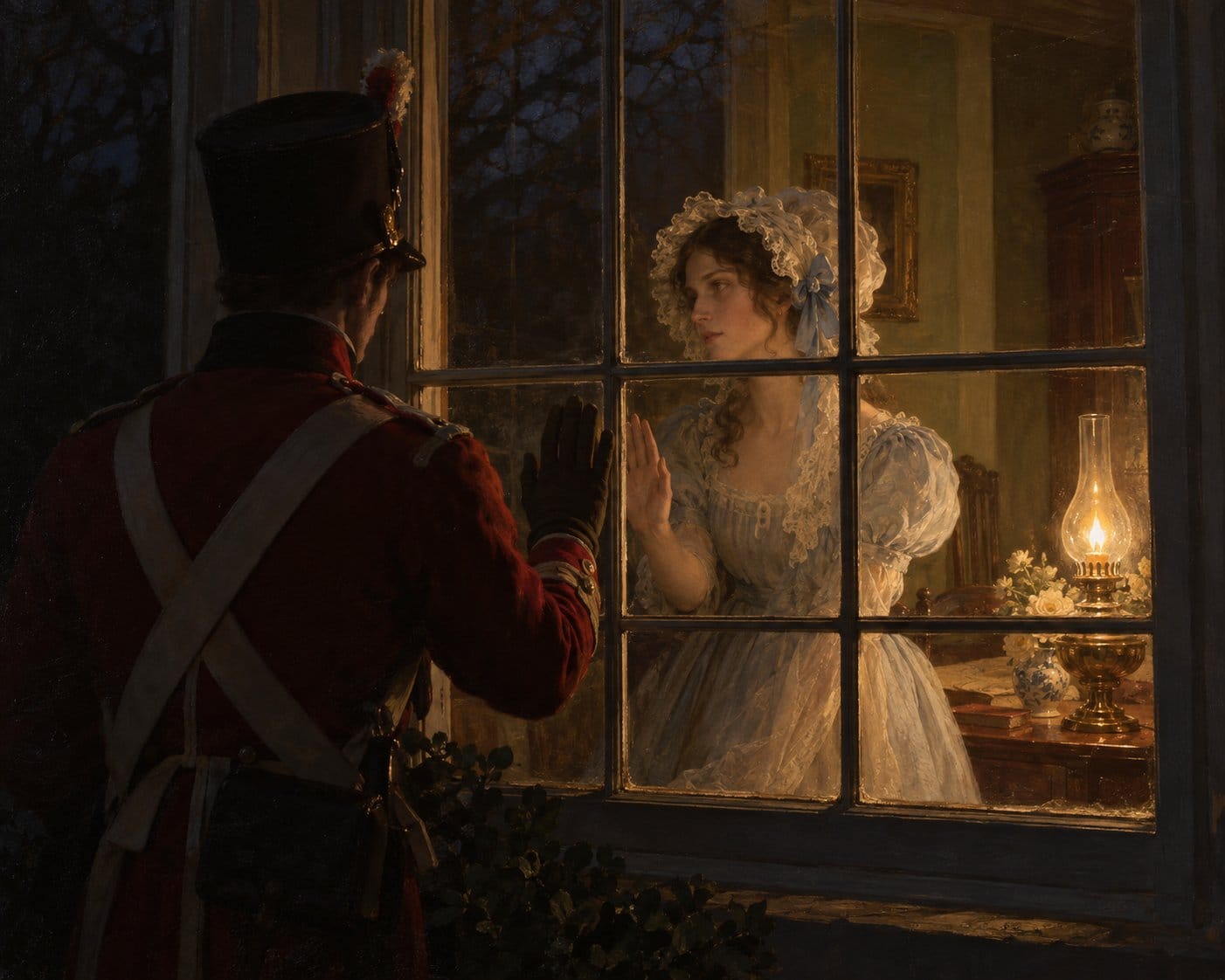
Her name was Elsa. Her father, Daniel Cloete, owned Kronendal for a short time around 1840, and a British garrison was stationed in Hout Bay. Elsa fell in love with one of the soldiers. She was Dutch, he was British, and in 1840 that was the end of the conversation. The family forbade it.
So they met at the windows. The story says that was as close as they ever got, her inside the house and him outside in the dark, talking through the glass.
It ends the way these stories end. The soldier is said to have hanged himself from one of the oaks in the avenue across the road. Elsa died not long after, of what the story calls a broken heart.
The oaks are still standing. You can see them from the front of the house.
What people have reported
Since the 1970s, at least five sightings have been written up in local newspapers and magazines, and they are unusually consistent with each other. A man among the oaks around sunset, standing still, facing the house. A young woman in an old-fashioned blue dress at one of the front windows.
South African History Online records a visiting English architect who watched a woman in a blue blouse, grey pinafore and bonnet rise from a nearby table and walk into a service area. He was told the legend only afterwards, and he never changed his account.
The table
The table is not our idea. In 1999, when the house was already a restaurant, the owners began setting a place for two in Elsa's honour, and no other guest was permitted to sit there.
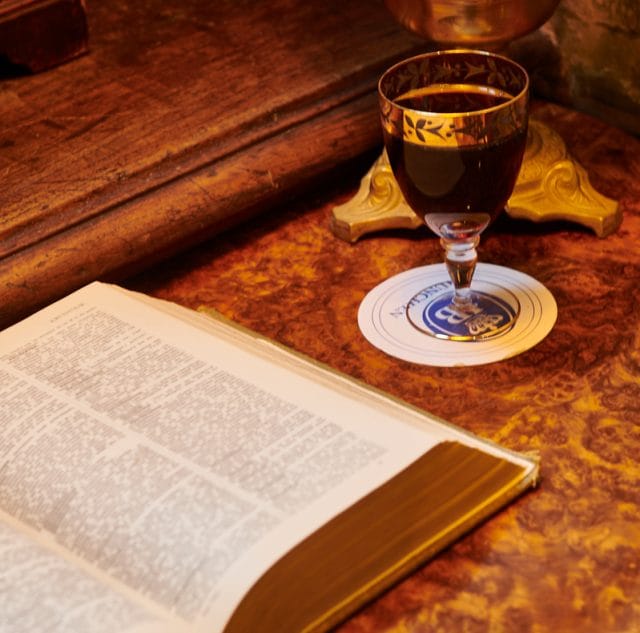
We still set it. Every day. Place laid, wine poured, nobody sitting there. We are not going to tell you what to believe about any of it. It costs us a glass of wine, and it has never once felt silly.
The house
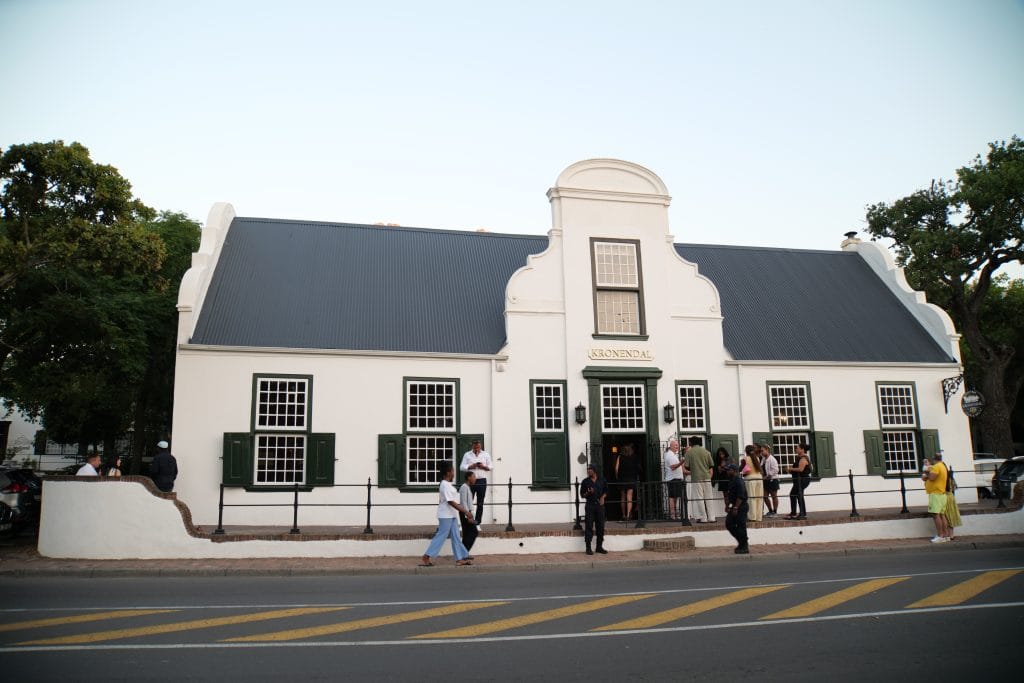
The front windows, from Main Road.
- 1670s
- A farm is established in the Hout Bay valley.
- 1713
- The back range of the homestead is built. It still stands, and it is the 1713 in the name.
- c.1800
- The front section is added, completing the H-plan. This date is set into the front gable.
- c.1840
- The Cloete family own Kronendal briefly. The legend of Elsa dates from here.
- 1960
- Declared a National Monument on 9 September.
You are sitting in the house it happened in. The oaks are across the road.